
They can’t learn what we don’t teach...
Mar 06, 2026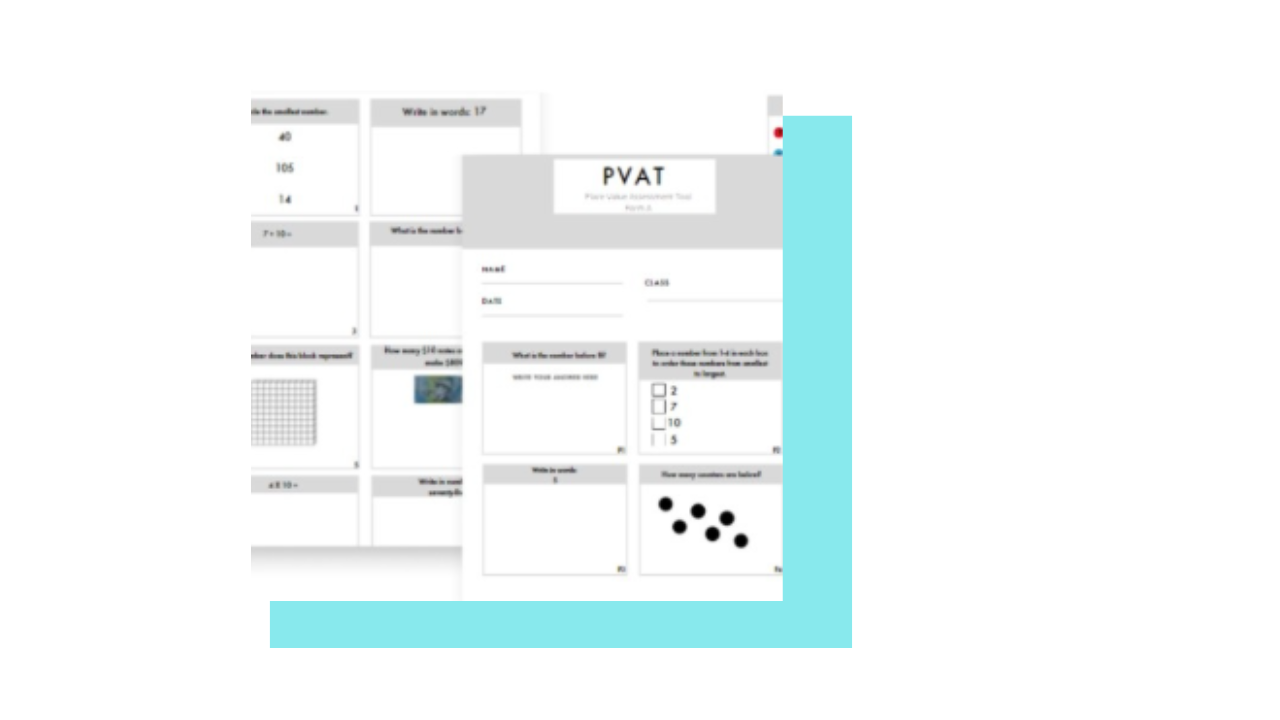
Assessment can provide us with insights into what we are, and are not teaching.
Since the roll out of my Number Fluency Program (NFP), I have been able to see school data related to critical Number skills, and what I have noticed is fascinating.
As part of the NFP I have created a whole-class administered screener for each year level from F-6 (except for Foundation which is an interview). The Screeners are based around 20 Number skills that I consider (from my research and my experience in the classroom) to be key in each year level.
I consider the skills 'key' for two reasons:
1. They are specifically related to the curriculum content in that year level
or
2. They are interim steps required to successfully reach a future curriculum outcome
I find reason #2 is something that is often overlooked when we are planning our teaching sequences.
We tend to be so focused on the 'curriculum' of our year level, we fail to take stock of what it is that our students might need to have in place to ensure they experience success in future year levels.
This reactive approach leads to teachers feeling overwhelmed and stuck in a desperate cycle of trying to close gaps and cram content into students who do not have the foundational knowledge required to master the curriculum at their year level.
In the work I do with schools, I advocate for a considered proactive approach that focuses on skill mastery from F-6.
Let me share an example to illustrate...
In the Australian Curriculum Version 9.0 our students are required to have fluent recall with multiplication and division facts up to 10x 10 by the end of Year 4 (AC9M4A02- recall and demonstrate proficiency with multiplication facts up to 10 x 10 and related division facts).
However, if they are to successfully achieve this goal, there are important skills and knowledge which needs to be put in place years before Year 4.
There is a collective whole-school responsibility for building multiplication facts that begins back in Foundation (and it is not just multiplication facts- this happens with many skills).
At the moment my 17-year old daughter is learning to drive.
In Victoria, learners need to clock 120 hours of supervised driving before they can be assessed for their 'P-plate licence'. In their driving test there are certain skills they are required to perform fluently (parallel parking, 3 point turns, lane merging etc).
My husband, daughter and I decided we needed to map out our 'plan of attack' if she was to reach her goal of getting her licence on her 18th birthday (which is New Year's Eve!).
To work out what we needed to put in place, we took the end goal and worked backwards.
We calculated (I was secretly loving the maths!) we would need to drive an hour per week for the rest of this year (we* had already clocked about 80 hours last year, and we considered other factors like Year 12 exams, 'Schoolies' week(!) etc,).
We needed to make sure we were providing plenty of opportunities to practice all the skills so she could feel confident under pressure in the driving test!
This reverse-engineering (starting at the end and working backwards) was exactly the thinking I used when I designed the Number Fluency Program.
I started with the curriculum goals in mind and worked backwards from there.
If I needed them to be fluent in multiplication and division in Year 4, what did I need from my Year 3,2,1 and F students?
This process helped me to map out the 20 skills needed in each Year level.
Through being proactive, I believe we can avoid the scrambling and stress that Year 4 teachers often feel when trying to address, amongst other things, the multiplication and division fluency description.
The load is then shared, and we allow solid foundations to been built across year levels.
We need to sometimes remind ourselves that the curriculum tells us what we need to assess.
Sometimes this gets confused with what we need to teach.
We can, and should, be teaching (and informally assessing) skills in Foundation (and other year levels) that are not specifically mentioned in the curriculum.
For example, doubles are not specifically mentioned in the Foundation or Year 1 curriculum, but this is where critical foundations must be laid to ensure our students reach the Year 4 curriculum goal.
Unless the Foundation teacher is aware of the role they play in this process, they may not teach, or may not place enough emphasis on these skill.
In my experience, this puts students on the back foot on their multiplication journey and, in turn, increases the load future teachers must carry.
One of the things the NFP Screeners show is clear information on what teachers are and are not teaching. Over and over I am seeing doubles are a missing piece and that translates years later to students who struggle to master their multiplication and division facts.
For me, this is one of the most powerful lessons for teachers when they unpack their data.
Teachers share thoughts like: "I didn't know we needed to focus on that in Year 1" and "Now I realise why you say doubles are so important".
As class teachers, when we create our own assessments, or we use commercial ones that are built around the curriculum descriptions, we are unlikely to see critical gaps in our teaching.
One thing is sure, students will not learn 100% of the content we don’t teach (unfortunately the opposite is not true- there is no guarantee they will learn 100% of what we teach), so this week I encourage you to take a look at your curriculum and do some backwards thinking. Where do my students need to be by the end of the year, and what do I need to put in place to make sure they get there?
Also, if you have any tips for teaching parallel parking please send them my way!
Have a great week,
Ange🎲🎓
*actually I refused to get into the car without her until this year